

A toy that journeyed to the very bottom of the ocean has been donated to the National Maritime Museum.
The soft toy Snoopy, based on the character in the classic comic series Peanuts, travelled with American oceanographer and geographer Dawn Wright during her descent into Challenger Deep in July 2022.
The daring dog dived nearly 11,000 metres (36,000 feet) to the deepest point of the ocean before returning safely to the surface. In doing so Snoopy became part of an exclusive club: to date, only 27 people have journeyed to the bottom of the Challenger Deep.

Now Snoopy is beginning a new adventure, joining the collections of Royal Museums Greenwich and helping to inspire a new generation of ocean explorers. The toy is currently being cared for at the Prince Philip Maritime Collections Centre.
‘Fair winds and following seas Snoopy!’ Wright said after handing over her deep-sea companion. ‘I’ll miss you dearly, but am comforted that you will have a wonderful new home in the UK and for so many to know of your/our story!’
Diving with ‘Deep Sea Dawn’
Dawn Wright is the first Black person to dive to Challenger Deep, having made the journey in the deep submergence vehicle (DSV) Limiting Factor with explorer Victor Vescovo. She offered Snoopy to Royal Museums Greenwich after sharing her experiences with the Museum’s online ‘Making Waves’ interview series.
Her Challenger Deep dive lasted ten hours in total – ‘with no toilet inside the submersible!’ – but although the space was confined Wright found the journey surprisingly tranquil.
Video courtesy of Esri
‘Descending into the ocean feels like going on a smooth, quiet elevator ride. It’s not at all like going into space where it’s very disruptive and you’re feeling all the G-forces. The Limiting Factor submersible is designed for ocean depth diving, so it slipped through the water very quickly,’ she said.
‘The colours that I saw were amazing. You have the gorgeous aqua blue that you see in the lit part of the ocean – known as the ‘euphotic zone’ – that is home to lots of life, which slowly recedes to grey. After about 1,000 metres, the ocean is pitch black, almost like ink.’
Wright has been a self-confessed ‘Snoopy groupie’ ever since reading the Peanuts comic strip created by cartoonist Charles M. Schulz when she was young. It felt only natural therefore to bring Snoopy along for the ride: ‘I’ve had a plush Snoopy in my life continuously from the time that I was a child, and one has always gone down with me on all of my submersible dives.’
Image

Snoopy's voyages
2002: joined Dawn Wright aboard the RV (research vessel) Revelle as part of the ‘DRIFT’ expedition, conducting bathymetric surveys around the island of Tutuila in American Samoa.
2005: travelled aboard the RV Kaimikai-o-Kanaloa and joined Dawn Wright in the DSV Pisces V as part of a research cruise to map and investigate deep corals near Tutuila.
2022: travelled aboard the DSSV (deep submergence support vessel) Pressure Drop during Caladan Oceanic’s ‘Ring of Fire’ Expedition. Dived with Dawn in DSV Limiting Factor during her record-breaking sidescan sonar survey within the Western Pool of Challenger Deep.
Exploring Challenger Deep
Challenger Deep is around 10,935 metres (35,876 feet) deep. If you dropped Mount Everest into it, the peak wouldn’t just disappear beneath the waves: it would lie more than a mile underwater.
The area is named after HMS Challenger, a 19th century British research vessel that embarked on a global voyage of exploration between 1872 and 1876. The expedition travelled 68,890 nautical miles (127,580 km) and discovered almost 5,000 new species.
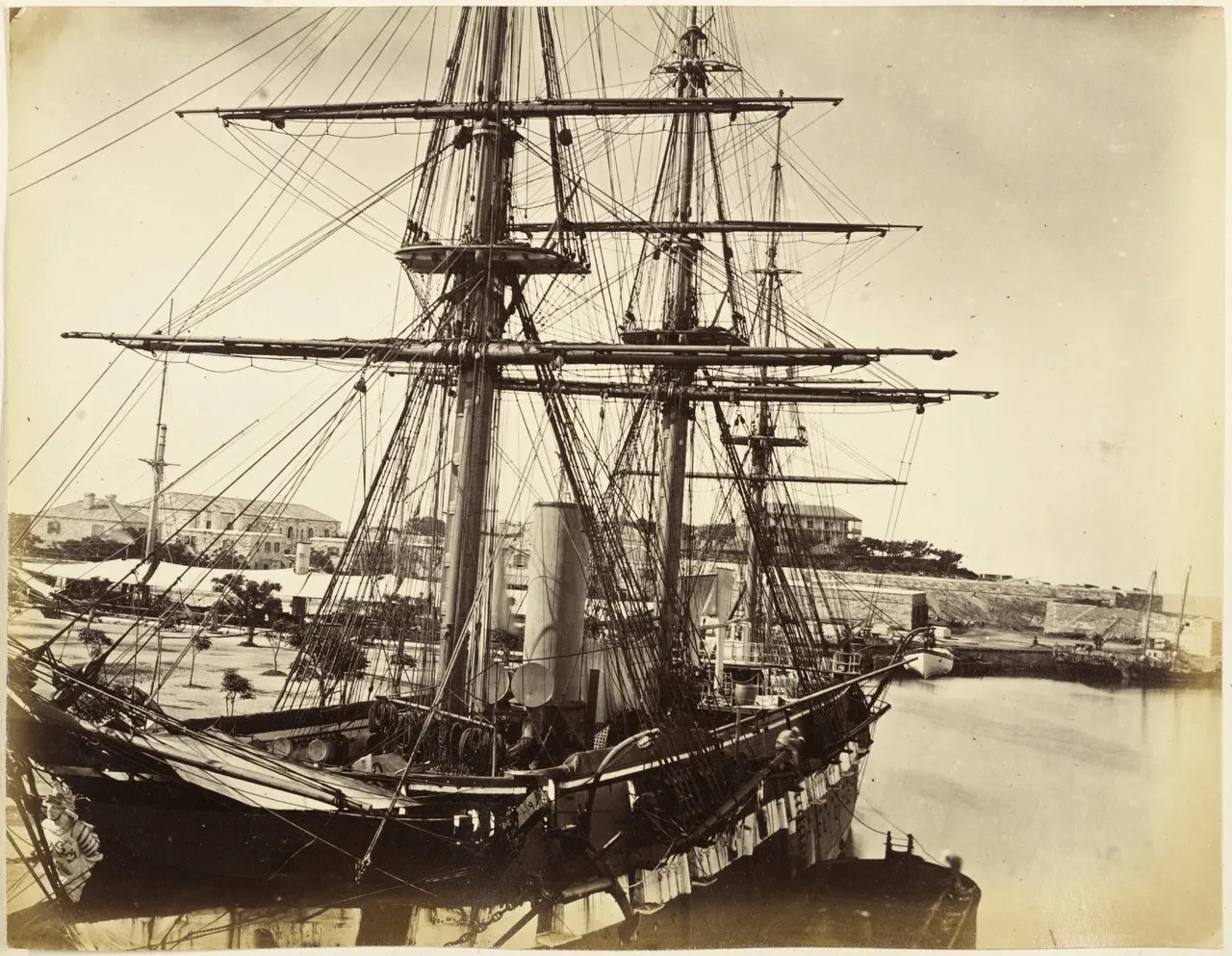
On 23 March 1875, Challenger scientists took a depth measurement to the south-west of the Mariana Islands in the Pacific Ocean. They were initially cautious when the reading revealed a depth of 4,475 fathoms (8,183 metres), but a second measurement confirmed the result.
Laura Boon-Williams, Lloyd’s Register Foundation Senior Curator: Contemporary Maritime, said that Wright’s Snoopy will help the National Maritime Museum chart the history of human exploration of the deep ocean.
‘The Museum has a significant collection holdings and research interest in the first exploration of Challenger Deep in 1875. This acquisition enables the Museum to better link the historical expedition with contemporary research,’ she said.
Snoopy is in good company when it comes to adventurous teddies, Boon-Williams added: ‘The Museum has a number of cuddly toys in the collection related to extreme exploration, including Humphrey the teddy bear, carried on the racing-yacht Maiden during the 1989-90 Whitbread Round the World Yacht Race by skipper Tracy Edwards, and Ponko the penguin, a promotional toy connected to Robert Falcon Scott's ill-fated Terra Nova Expedition to Antarctica. These objects humanise elite explorers.’
Image

Did you know?
Snoopy hasn’t just travelled to the deepest point in the ocean. He’s also been to space!
In 1968 Snoopy was selected as the mascot for NASA’s space flight safety programme, with silver Snoopy pin badges given to staff who went above and beyond in the name of safety. Astronauts on Apollo 8, the first crewed mission to leave Earth’s orbit, also took Snoopy pin badges with them during the mission.
In 1969 the crew of NASA’s Apollo 10 Moon mission chose to nickname their command and lunar modules Charlie Brown and Snoopy respectively. Over 50 years later, a toy Snoopy journeyed into space as the Artemis I mission’s official ‘zero gravity indicator’.
Under pressure
If you could stand on the bottom of Challenger Deep, the weight of water pressing down would be the equivalent of 100 elephants standing on your head. To demonstrate just what that kind of pressure can do, scientists have come up with a novel experiment.
‘It is a well-established tradition amongst oceanographers to decorate Styrofoam cups and then attach them to the outside of subs during deep-sea dives, to create a souvenir of the conditions of their extreme dive,’ Boon-Williams said.
Unlike the researchers inside the submersible, these cups are fully exposed to the deep-sea environment. As the depth increases and the pressure builds, the tiny air pockets inside the foam cups are squeezed and crushed. When they return to the surface, the cups are permanently shrunk.
As well as Snoopy, Wright has also donated one of her ‘crushed cups’ to the Museum, made during a previous dive to the Juan de Fuca Ridge in the North Pacific. At three centimetres tall the cup is a third of its original size, and yet Wright's Snoopy drawing and the words ‘Snoopy goes to sea!’ are still clearly visible.

The cup is a reminder of the challenges that oceanographers face to better understand our blue planet. ‘Although increasingly this research is undertaken by un-peopled robotic vessels, human-led dives are still vital in increasing understanding of the ocean environment,’ Boon-Williams said.
Wright’s journey to Challenger Deep was part of a broader mission to develop a complete map of the deep-sea floor by the year 2030. The submersible was equipped with a groundbreaking portable sidescan sonar system, designed to take detailed imagery of the ocean floor in extreme environments.

‘Overall, the expedition in July collected four terabytes of data, including high-resolution videography of the Western Pool,’ Wright said. ‘The data has been given to Seabed 2030 and ArcGIS's Living Atlas of the World, which brings together geographical information from around the globe.’
With grateful thanks to Dawn Wright, the teams at Esri and Esri UK, and Digital Content Producer Elizabeth Oliver for making this acquisition possible
An ocean of stories
Read more
Our relationship with the sea is changing. Discover how the ocean impacts us – and we impact the ocean – with the National Maritime Museum.


